
How Greece’s Golden‑Visa Shift Alters Where—and How—you Buy
How recent Golden‑Visa thresholds, cadastre coverage and Greek tax rules alter where international buyers find lifestyle value — and the legal steps to protect it.
 Villa Curated
Imagine arriving in Athens on an early spring morning, the city a slow wash of light across Neoclassical façades, and the smell of freshly baked koulouri drifting from Syntagma. You picture a neighbourhood café where the owner knows your name, a shaded terrace in Plaka or a whitewashed courtyard on Naxos where summers feel endless. That intimacy—the quiet rituals of Greek daily life—meets a changing legal landscape that every international buyer must respect; rules that now shape where value accumulates and how a house becomes a life.
Living Greece: rhythms that matter to a buyer
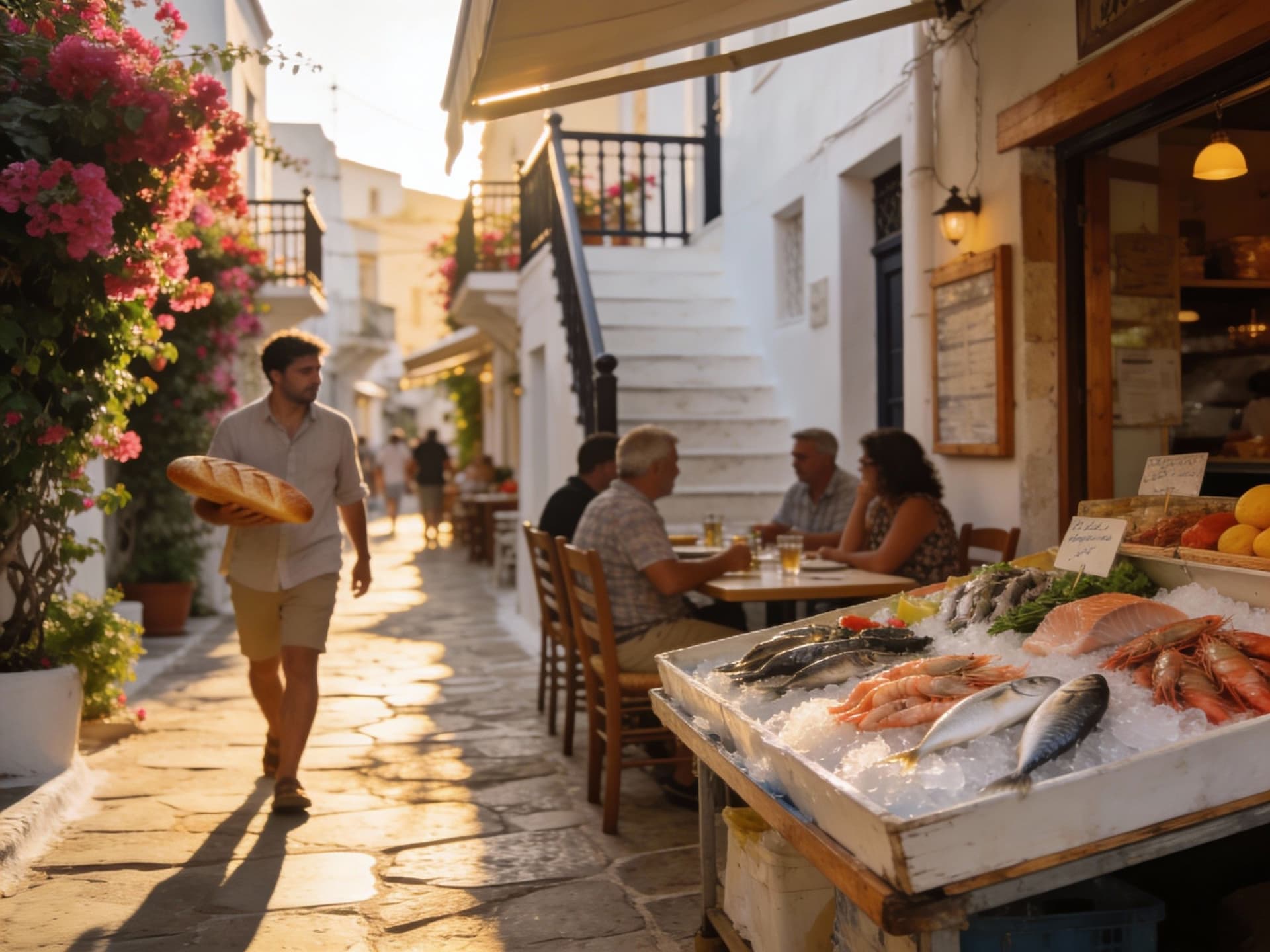
Greece moves at multiple paces. Athens hums with morning markets on Evripidou and late dinners in Kolonaki. In Mykonos and Santorini, narrow streets empty at dawn and return at dusk for the ritual of aperitivo and sea-salted supper. In provincial towns—Chania, Nafplio, Patras—weekends centre on the municipal square, local bakeries and small tavernas where property life is social as well as spatial. For buyers, these rhythms determine what you need from a home: a ground-floor studio for café life, a shaded courtyard for siesta, or a hillside house for long views and seasonal quiet.
Neighbourhoods worth knowing — Athens and the islands
If you want proximity to cultural life, consider Mets or Koukaki in Athens—stone streets, small galleries, and bakeries that open before dawn. For seaside living with a spirited food scene, Agios Nikolaos in Crete and the quieter corners of Kefalonia reward patient buyers. On islands, the contrast is decisive: Hidra’s strict preservation rules protect character; Paros rewards those who prize understated village life over Mykonos’ theatrics.
Food, markets and the year that shapes a house
Picture Saturday at Varvakios Agora in Athens: fishmongers arranging catches, olive oil poured into small cups for tasting, and neighbours exchanging news. That local fabric influences property choices—proximity to markets, access for deliveries, and the orientation of terraces for afternoon shade. Seasonal life matters too: a house built for long summers needs shutters and cross‑ventilation; a property intended for year‑round living should be close to reliable services and a connected road. Use the Hellenic Cadastre maps early to check parcels and boundaries before negotiations begin.
Making the move: legal shifts that change where you bid

Recent legislative changes—most visibly the step‑up in Golden‑Visa thresholds—reconfigure value corridors. Areas once favoured by investor demand now require larger minimum acquisitions, which makes peripheral towns relatively more attractive for buyers seeking both lifestyle and value. At the same time, national tax and cadastre processes remain intricate: transfer tax calculations, VAT treatment of new builds, ENFIA declarations and cadastre registrations are not optional details. Early, document‑forward diligence saves both emotion and capital.
Property types and what they mean in practice
A stone island house with a cistern and thick walls offers year‑round cool; its maintenance costs and restoration obligations differ markedly from a modern apartment in Glyfada or Kifisia. New builds may carry VAT; second‑hand sales are subject to a transfer tax (generally 3% of taxable value). If you value provenance and craft, budget for certified restorations and permits; if you prioritise turnkey simplicity, expect higher upfront VAT or developer warranties. Let the property’s architecture guide the legal checklist.
Working with local experts who preserve the life you want
A Greek solicitor fluent in cadastral practice, a chartered surveyor who reads HEPOS coordinate outputs, and an architect familiar with local conservation rules form the core team. They translate local custom into contract clauses—ensuring correct ownership chains, noting servitudes (δικαιώματα διέλευσης), and confirming whether a building falls within protected zones or restoration incentives. Agencies that pair lifestyle curation with legal rigour are worth their fee; they protect the quotidian life you expect to buy.
Checklist: practical steps before you sign
Start with verified identifiers (KAEK cadastral code or title deed references), obtain an energized NIF tax number, instruct a land survey if cadastre coverage is incomplete, and request a full extract from the land registry and tax office. Confirm VAT status for new builds and whether the seller’s tax clearances are current. This sequence prevents the common trap: falling in love before the paperwork is proven.
Insider knowledge: what expats most often learn too late
Expats commonly underestimate post‑purchase administration: the E9/ENFIA declaration deadlines, municipal levy procedures, and the need to register any change to property title promptly. Practically, that means budgeting for annual property tax notices, occasional cadastral rectifications and the modest but persistent cost of local bureaucracy. The sensible buyer treats these recurring steps as part of stewardship, not as adversarial red tape.
Cultural realities that shape negotiations
Negotiations in Greece are often personal. Sellers prize provenance—family history, restoration care—or the way a house has hosted generations. Demonstrating respect for that story and an intention to steward rather than flip a property changes tone and can influence price and terms. Choose agents who can translate both legal points and local sentiment; they will know when a written clause matters more than an emotive appeal.
Longer view: inheritance, legacy and the cadastre
Greece’s inheritance practices and the completeness of cadastral records influence long‑term stewardship. Title clarity avoids disputes for heirs; registration in the cadastre and a clear E9 history simplify future transfers. If your purchase is intended as a multi‑generation home, prioritise clean, registered titles and documented restorations—small extra legal cost now spares complex probate and potential familial friction later.
Practical numbered sequence to close with confidence
Obtain a NIF and open a local bank account; commission title search and cadastre check; sign a preliminary agreement with deposit and clear conditional clauses; instruct notary and solicitor to prepare final deed; settle transfer tax/VAT and register title in cadastre.
Lifestyle considerations that should change your legal priorities:
Proximity to markets and year‑round services — affects resale and rental desirability
Historic listing or conservation status — may entitle grants but impose restrictions
Short‑term rental rules — recent laws limit Golden‑Visa‑driven lettings and shape income models
Access and servitudes — local paths and rights of way are often decisive on islands
Conclusion: marry the life you covet with legal clarity
Greece rewards patience: the right season to buy may be off‑peak, and the right property often hides behind a modest façade. Let lifestyle lead your search—cafés, markets, light and community—but insist on legal clarity from the first exchange. Engage a solicitor, confirm cadastre status, and budget for ongoing stewardship. When lifestyle and legal certainty coincide, a Greek house becomes not just an investment but the setting for a life that feels inevitable.
Villa CuratedRelocating from London to Mallorca in 2014, I guide UK buyers through cross-border investment and tax considerations. I specialise in provenance, design integrity, and long-term value.
Related Articles
More insights that might interest you
 Villa Curated
 Villa Curated
 Villa Curated